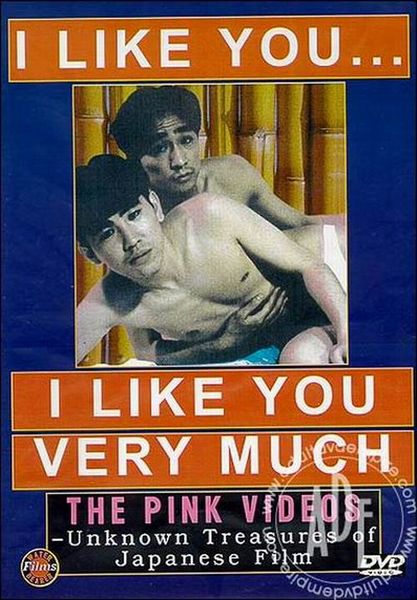
This groundbreaking drama, one of few to feature gay lifestyles in a Japanese context, is the work of writer, editor, cinematographer, director and co-star Hiroyuki Oki, an avant-garde filmmaker. In the liberal enclave of Kochi City, Japan, a gay college student, You (pronounced using two syllables as “Yo-ooh”), is living a contented life with his lover and classmate. Then he spies an attractive young man at a train station, and their meeting leads to a subsequent sexual encounter. Although You confesses his infidelity to his boyfriend and even seeks the advice of an ex-lover, he does not completely break off his new relationship, leading to a love triangle that forces each of the men to question his sexuality and identity. Running barely one hour long, I Like You, I Like You Very Much (1995) was short for a feature-length film but earned critical respect for tackling what remains an extremely sensitive cultural issue in its home country.
Read More »
Tag Archives: japanese
Tômei ningen to hae otoko / The Invisible Man vs. The Human Fly (1957) Mitsuo Murayama, Ryûji Shinagawa, Yoshirô Kitahara, Junko Kanô, Crime, Fantasy, Sci-Fi
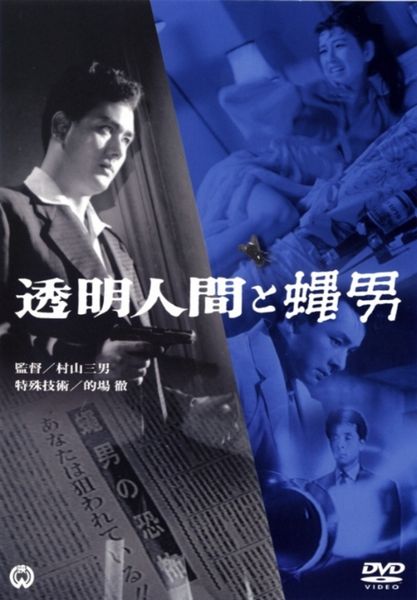
A series of ghastly murders is being committed. The one similarity in each of the murders is that a weird buzzing sound is always heard right before the murder occurs. Is the killer invisible or possibly some other incredible creature?
Read More »
Kousatsu / The Strangling (1979) Kaneto Shindô, Kô Nishimura, Nobuko Otowa, Tsutomu Kariba, Drama
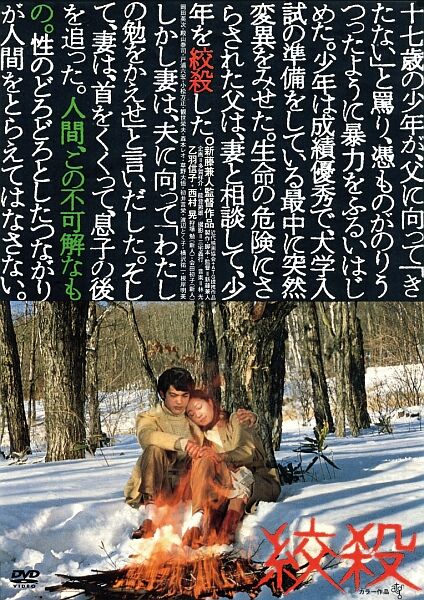
Kousatsu portrays and condemns the oppressive atmosphere of a highly competitive society governed by “hypocritical adults” that prevent young people being young, leading them to commit acts of rebellion and acts of uncontrolled violence or even self-destruct.
Read More »
Matatabi / The Wanderers (1973) Kon Ichikawa, Isao Bitô, Tadao Futami, Ken’ichi Hagiwara, Drama
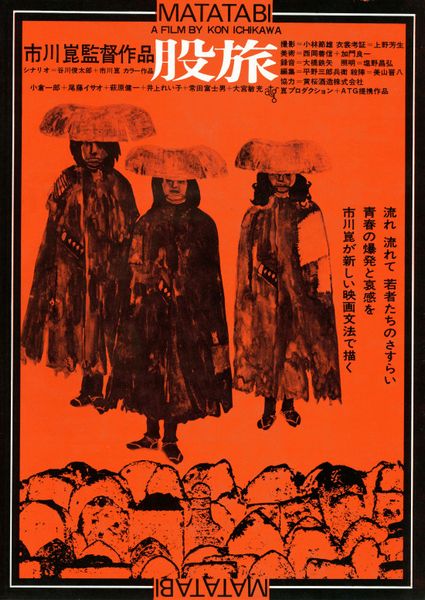
Follows the fluctuating fortunes of three friends in feudal Japan who are ronin: masterless warriors, who wander from castle to castle, selling their services to whichever lord will fill their rice bowls. These are not the YOJIMBO Super Samurai but rather the rank and file, the spear-carriers. The irony is that even though they use the servants’ entrance, they still feel themselves bound by the samurai code of Bushido; and this tension leads to tragedy.
Read More »
Waga ai no uta – Taki Rentaro monogatari / Bloom in the Moonlight: The Story of Rentaro Taki (1993) Shin’ichirô Sawai, Tôru Kazama, Isako Washio, Ryo Amamiya, Biography, Drama, Music
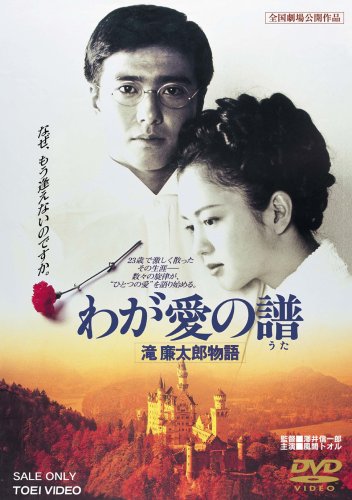
In April 1895, the talented young Rentaro Taki comes to Tokyo from his home in Kyushu to enrol in the prestigious National Academy of Music. Hoping to become a pianist, he meets another student there, Yuki Nakano, who shares the same aspirations. With his elder classmate Suzuki’s encouragement, Rentaro practices furiously to perfect his technique, but loses his health in the process. Over the years, his health, as well as his devotion to and achievement level in music, fluctuates, as two friends adjust to the varying roles they can each potentially play in his life. Yuki receives the Japanese government’s first music scholarship to study in Berlin. At the same time, Rentaro composes wonderful music and songs like Bloom in the Moonlight which are still very popular in today’s Japan, while Suzuki quits the music school and becomes a hard labourer due to family crisis.
Read More »
Aoi numa no onna / Blue Lake Woman (1986) Akio Jissôji, Kotobuki Hananomoto, Janet Hatta, Saburô Shinoda, Horror
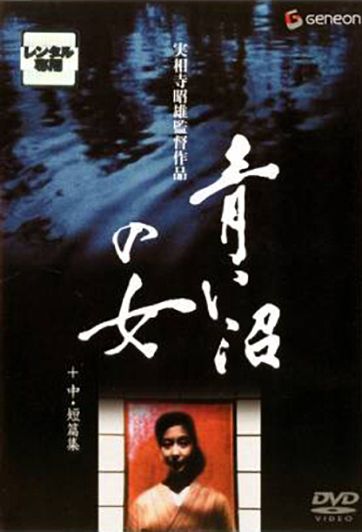
Blue Lake Woman tells the story of Nagare, a painter who wanted to commit a lover’s suicide with Mizue, the wife of his friend and patron Takigawa. Growing afraid at the last moment, he doesn’t go through with it – but Mizue sinks to the bottom of Blue Lake. Some time later, Nagare follows an invitation by Takigawa, who claims to have forgiven everything. To Nagare’s shock, Takigawa’s new wife, Ameko, looks exactly like Mizue. While staying as Takigawa’s guest, Nagare becomes haunted by Mizue’s ghost, who wants to be reunited with him at the bottom of Blue Lake…
Read More »
The Battle of Okinawa (1971) Kihachi Okamoto, Keiju Kobayashi, Yûzô Kayama, Tetsurô Tanba, Drama, War
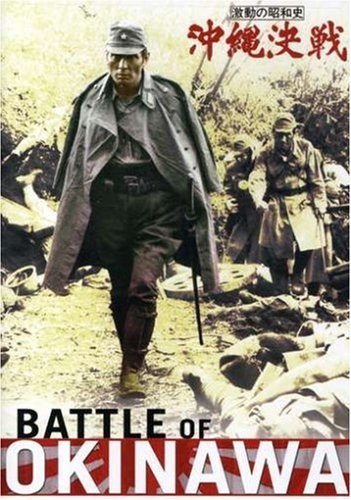
It is spring, 1945. The war is going badly for the Empire of Japan. Outnumbered and outgunned, the soldiers of the Empire are being forced back, island by island, towards the homeland.
Read More »
Underworld Beauty (1958) Seijun Suzuki, Michitarô Mizushima, Mari Shiraki, Shinsuke Ashida, Crime, Drama, Film-Noir
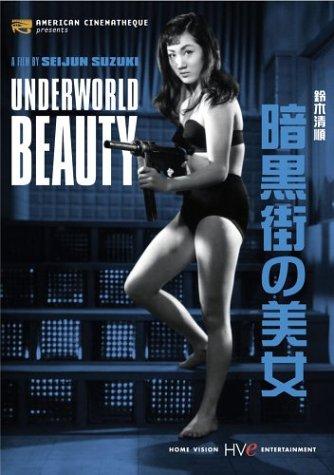
The moment he’s released from prison, the honorable gangster Miyamoto recovers the stolen diamonds he had stashed before getting pinched. When he returns to his haunt to make good by friend who took a bullet for him, he is diverted by the greedy boss Oyane and his insatiable taste for Miyamoto’s precious stones. Replete with film noir style, “Underworld Beauty” is one of Suzuki’s best nods to the American gangster genre.
Read More »
Yog: The Space Amoeba (1970) Ishirô Honda, Akira Kubo, Atsuko Takahashi, Yukiko Kobayashi, Adventure, Sci-Fi
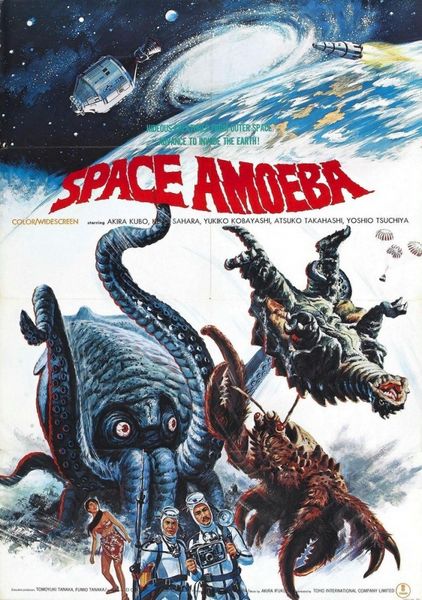
When a space probe crash-lands on a far-flung Pacific atoll, the craft’s alien stowaways decide to take over their new world one creature at a time. Soon, the parasitic life forms latch onto three indigenous critters – a squid, a crab and a snapping turtle – and transform them into colossal mutant monsters.
Read More »
Shonen / Le Petit Garcon / Boy (1969) Nagisa Ôshima, Fumio Watanabe, Akiko Koyama, Tetsuo Abe, Drama
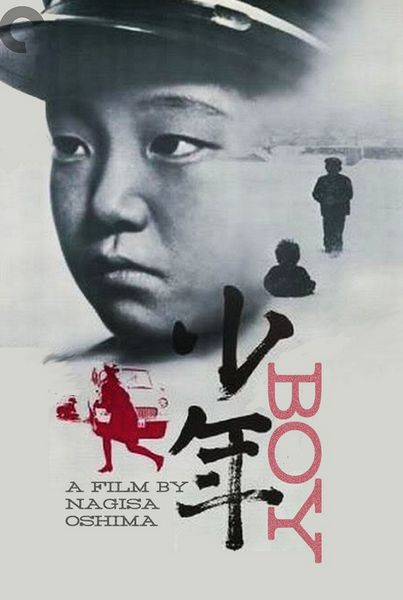
Based on real events reported in Japanese newspapers in 1966 “Boy” follows the title character, Toshio Omura, across Japan, as he is forced to participate in a dangerous scam to support his dysfunctional family. Toshio’s father, Takeo Omura, is an abusive, lazy veteran, who forces his wife, the boy’s stepmother, Takeko Tamiguchi, to feign being hit by cars in order to shake down the motorists. When his wife is unable to perform the scam, Toshio is enlisted…
Read More »