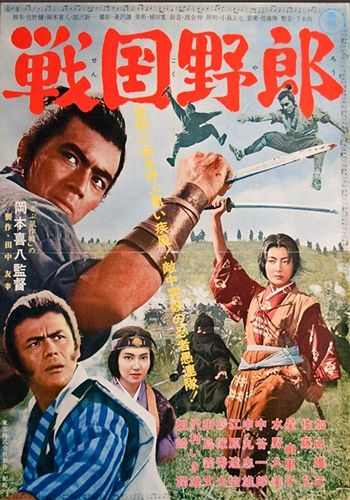
A lone masterless warrior with some new friends helps ship 300 rifles to a Japanese warlord during the sengoku period. Read More »
Tag Archives: Makoto Satô
Retreat from Kiska (1965) Seiji Maruyama, Toshirô Mifune, Sô Yamamura, Makoto Satô

In 1943, the Aleutian island of Kiska was fortified by a small contingent of Japanese soldiers. Read More »
Living on the River Agano (1992) Makoto Satô

In 1964, a chemical factory in Niigata Prefecture dumped mercury into the Agano River Read More »
Blood for Blood (1971) Yasuharu Hasebe, Jô Shishido, Makoto Satô, Meiko Kaji
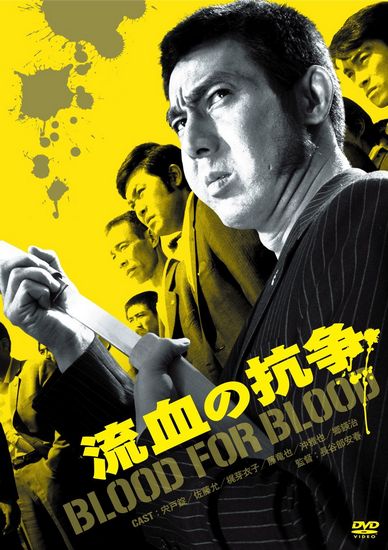
A uniformly excellent, no-no-nonsense, straightforward yakuza sage. Read More »
Exchange Students (1982) Nobuhiko Ôbayashi, Satomi Kobayashi, Toshinori Omi, Makoto Satô
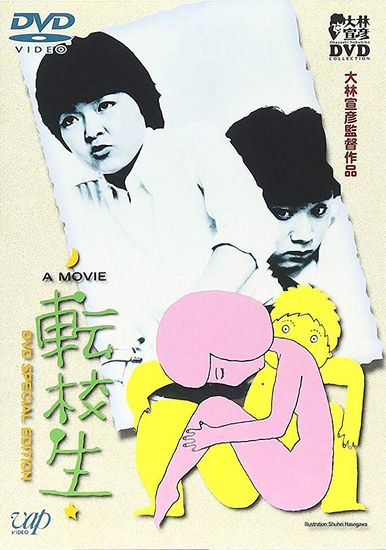
9th-graders Kazuo (boy) and Kazumi (girl) take a tumble at a temple in a small seacoast town in Japan. Read More »
Blind Woman’s Curse (1970) Teruo Ishii, Meiko Kaji, Hoki Tokuda, Makoto Satô

Akemi and the man of her clan confront their opponents; Akemi delivers a sword thrust to kill the opponents’ leader Read More »
The Killing Machine (1975) Noribumi Suzuki, Shin’ichi Chiba, Yutaka Nakajima, Makoto Satô, Action, Drama
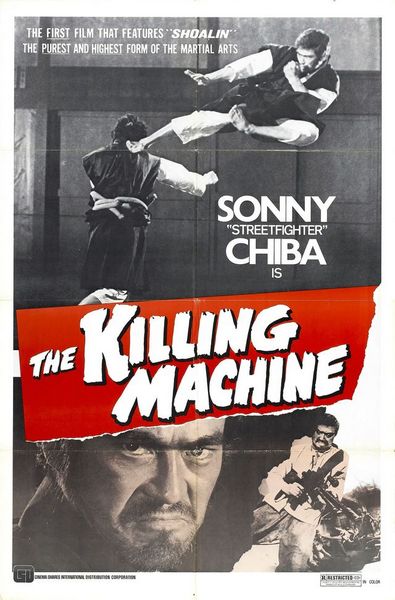
Sonny Chiba plays the character referred to as “Mr Soh”, who is based on the true life founder of Shorinji Kempo, Doshin So. Mr Soh has been acting as a secret agent in Manchuria during the Japanese occupation. Read More »
Self and Others (2001) Makoto Satô

In 1983, photographer Gocho Shigeo met an early death at the young age of 36. The view we see reflected in Gocho’s photographic images has become more profound over time since his death and has struck a chord in people’s hearts. Read More »