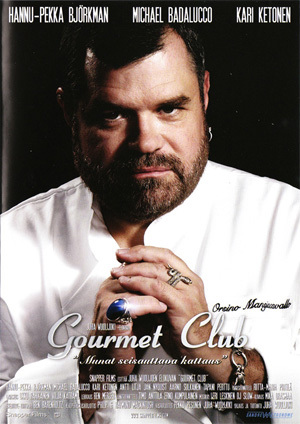
“Gourmet Club” follows a doctor who belongs to a small but exclusive gourmet club, in which the five upper-class members take turns providing the main course, wagering as to who can identify a mystery exotic ingredient. Things get interesting when the doctor’s gambling problem catches up with him. Desperate, he comes up with the idea to use a truly shocking mystery ingredient to fool his colleagues, but he gets more than he bargained for when the mystery meal has a surprising and powerful effect on the members.
Read More »
Tag Archives: 2000s
Duska (2007) Jos Stelling, Sergey Makovetskiy, Gene Bervoets, Sylvia Hoeks, Drama

An older film critic’s life is interrupted by an unexpected visitor.
Read More »
The Pierre Woodman Story / A Pierre Woodman sztori (2009) András Kovács M., Péter Szajki, Documentary, Erotic

This documentary shows the life of French porn film director and producer Pierre Woodman, who has discovered several dozen Hungarian, Czech, Slovak, and Russian girls for the porn industry; girls who did not have a second though about participating in Pierre’s castings. This French-born entrepreneur and dare-devil is famous and envied for recording his porn movie castings, during which he “tests“ the candidates. Monsieur Woodman is 45 years old and has had 3000 sexual contacts with women so far.
Read More »
The Heart Is Deceitful Above All Things (2004) Asia Argento, Dylan Sprouse, Cole Sprouse, Drama

The dysfunctional twenty-three years old Sarah takes her six year old natural son Jeremiah from the home of his beloved foster parents with the support of the social service to live with her. Along the years, the boy shares her insane and lowlife style and is introduced to booze and drugs and mentally, physically and sexually abused by Sarah, her lovers and her religiously fanatic family.
Read More »
Francesca (2009) Bobby Paunescu, Monica Barladeanu, Dorian Boguta, Luminita Gheorghiu, Drama

Wanting to follow the current trend, Francesca, a young teacher from Bucharest, is eager to emigrate to Italy. Unfortunately,whilst desperately seeking support from those nearest and dearest to her, various untold truths unravel.
Read More »
NimmerMeer / Nevermore (2006) Toke Constantin Hebbeln
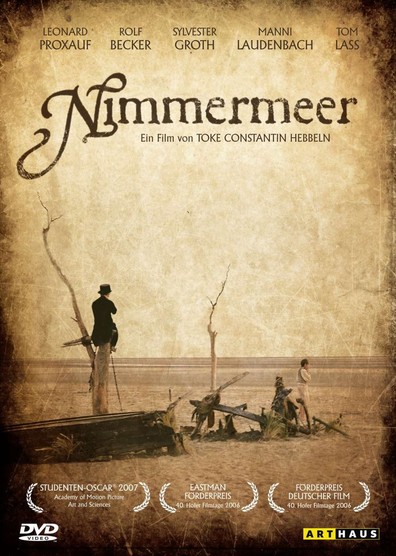
One night he will fetch the silver from the night sky Jonas loves his fathers magical stories. When Helge dies, Jonas ends up in an orphanage whereupon dreariness and discipline rule his life until a group of circus performers appear in the village.
Read More »
Paloma de papel / Paper Dove (2003) Fabrizio Aguilar

Juan, a young man convicted of terrorism, is given amnesty from a Lima prison; he boards a bus to return home and, in his mind’s eye, recalls events in his village near Huaraz when he was 10 or 12. His father is long dead, his mother lives with Fermin, secretly a sympathizer with the Communist guerrillas in the hills. Town leaders are assassinated at night. When Juan discovers Fermin’s secret, Juan is spirited away to the guerrillas to learn Marxist slogans and how to fight. When the band decides to attack the town to avenge the death of a comrade, Juan must choose. There are no white hats on any side: critical thought without love of life bears no fruit, writes Erich Fromm.
Read More »
Anklaget / Accused (2005) Jacob Thuesen

On the surface Henrik and Nina Christofferson are an ordinary family living happily. But they have a problem. Their daughter, Stine, a difficult 14 year old, has a habit of telling lies in class. When Stine accuses her father of sexual abuse, and is believed by seemingly eager social workers, their family is thrust into crisis. Could Henrik have done it? And when Stine prepares to return home, the ugly side of family life is exposed.
Read More »
Adam Resurrected (2008) Paul Schrader
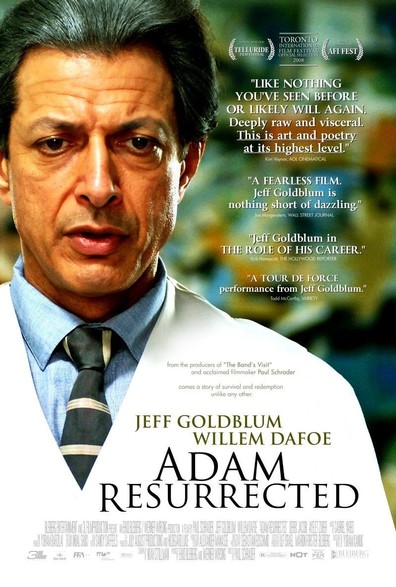
“Adam Resurrected” follows the story of Adam Stein, a charismatic patient at a mental institution for Holocaust survivors in Israel, 1961. He reads minds and confounds his doctors, lead by Nathan Gross. Before the war, in Berlin, Adam was an entertainer–cabaret impresario, circus owner, magician, musician–loved by audiences and Nazis alike until he finds himself in a concentration camp, confronted by Commandant Klein. Adam survives the camp by becoming the Commandant’s “dog”, entertaining him while his wife and daughter are sent off to die. Years later we find him at the Institute. One day, Adam smells something, hears a sound. “Who brought a dog in here?” he asks Gross. Gross denies there is a dog but Adam finds him–a young boy raised in a basement on a chain. Adam and the boy see and recognize each other as dogs–and their journey begins. “Adam Resurrected” is the story of a man who once was a dog who meets a dog who once was a boy.
Read More »
Fur: An Imaginary Portrait of Diane Arbus (2006) Steven Shainberg

In 1958, in New York City, the upper class Diane Arbus is a frustrated and lonely woman with a conventional marriage with two daughters. Her husband is a photographer sponsored by the wealthy parents of Diane, and she works as his assistant. When Lionel Sweeney, a mysterious man with hypertrichosis (a.k.a. werewolf syndrome, a disease that causes excessive body hair), comes to live in the apartment in the upper floor, Diane feels a great attraction for him and is introduced to the world of freaks and marginalized people, falling in love with Lionel.
Read More »