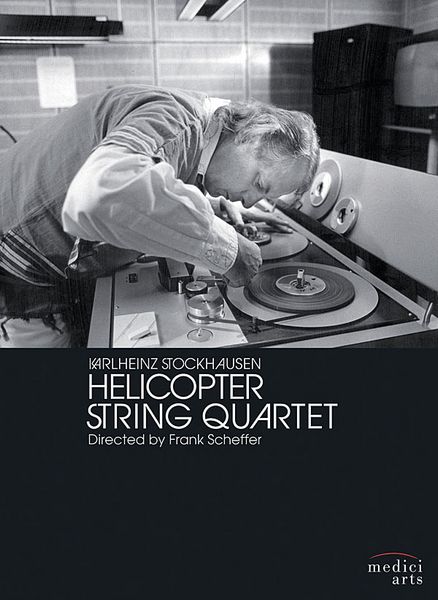
This is not a joke. Karlheinz Stockhausen dreamt of it and he did it. He wrote a score for a string quartet whose musicians (in this instance the Arditti Quartet) would each play in a helicopter, while their music would be mixed on the ground by Stockhausen and broadcasted in the concert hall. The helicopter rotors are naturally present.
Read More »
Documentary
Presque rien avec Luc Ferrari (2005) Jacqueline Caux, Olivier Pascal, Documentary
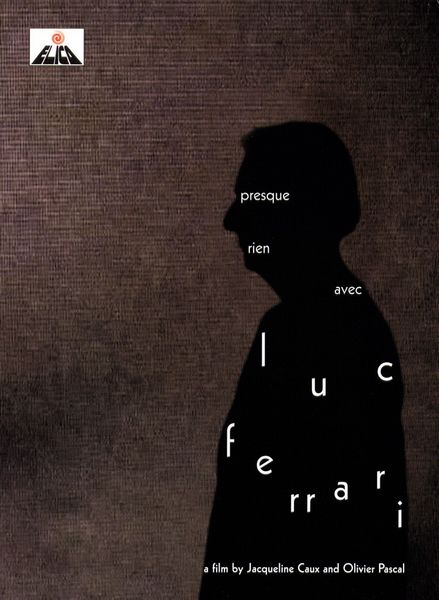
Documenting the work of one of the most groundbreaking and seductive composers of the Twentieth Century, this film also shows Luc Ferrari’s “extremely libertarian personality: his spontaneity, his inclination towards hedonism and sensuality, his curious and open character, his rejection of all kind of power and of all stable position within institutions, his pronounced taste for jeux, his sense of self-derision and his ferocious refusal of all dogmatism”.
Read More »
A State of Mind (2004) Daniel Gordon, Hyon Sun Pak, Song Yun Kim, Documentary
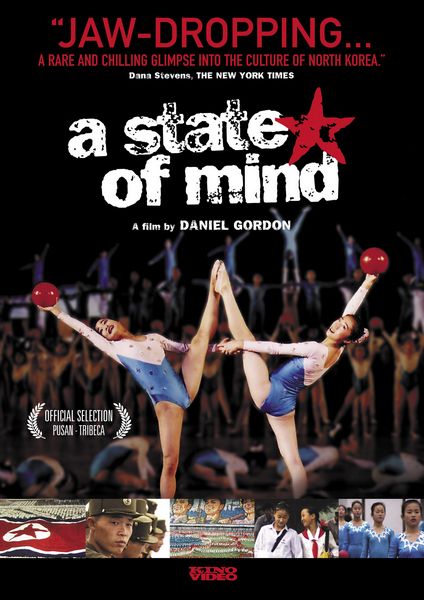
State of Mind is an eye-opener: In documenting the daily grind of 13-year-old Pak Hyon Sun and 11-year-old Kim Song Yun as they prepare for the yearly Games, Gordon reveals what it’s like to live in North Korea today.
Read More »
American Movie (1999) Chris Smith, Mark Borchardt, Mike Schank, Tom Schimmels, Documentary, Comedy
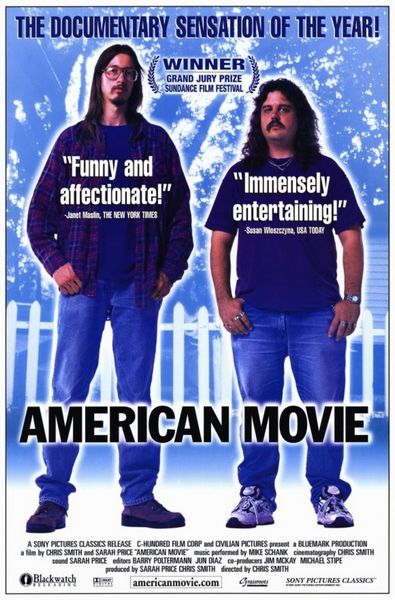
On the northwest side of Milwaukee, Mark Borchardt dreams the American dream: for him, it’s making movies. Using relatives, local theater talent, slacker friends, his Mastercard, and $3,000 from his Uncle Bill, Mark strives over three years to finish “Covan,” a short horror film.
Read More »
This Is Cinerama (1952) Merian C. Cooper, Gunther von Fritsch, Lowell Thomas, Kathy Darlyn, Documentary

A standard screen B&W prologue during which Lowell Thomas shows how, from the dawn of history, mankind has attempted to create the illusion of depth & movement by artistic, mechanical and photographic means.
Read More »
Of Time and the City (2008) Terence Davies, Documentary, Biography
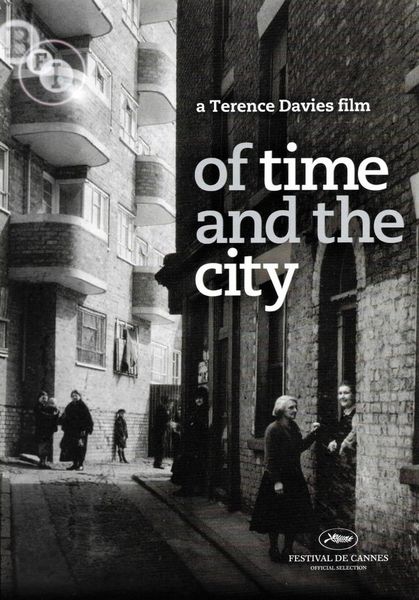
Terence Davies (1945- ), filmmaker and writer, takes us, sometimes obliquely, to his childhood and youth in Liverpool. He’s born Catholic and poor; later he rejects religion. He discovers homo-eroticism, and it’s tinged with Catholic guilt. Enjoying pop music gives way to a teenage love of Mahler and Wagner. Using archival footage, we take a ferry to a day on the beach. Postwar prosperity brings some positive change, but its concrete architecture is dispiriting. Contemporary colors and sights of children playing may balance out the presence of unemployment and persistent poverty. Davies’ narration is a mix of his own reflections and the poems and prose of others.
Read More »
Trou Story (2011) Richard Desjardins, Robert Monderie, Documentary
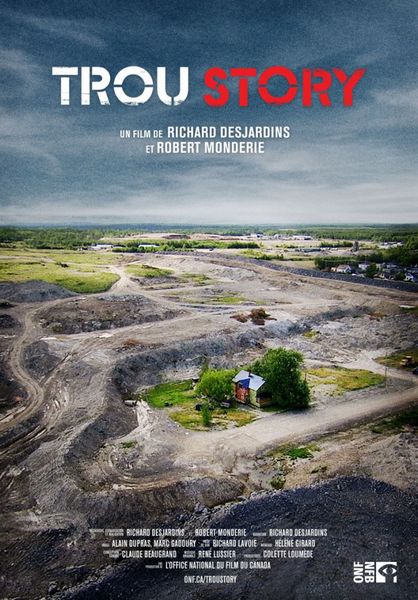
A documentary on past and current business practices in Canada’s mining industry, and the involved natural resources, health and taxation issues.
Read More »
Come on Children (1973) Allan King, Alan Dunikowsky, Ken Gibbs, John Hamilton, Documentary
Born of talks with four hundred disaffected teenagers in the suburban belt around Toronto, the film reflects their recurring theme: “Wouldn’t it be great if we weren’t hassled by parents and police, didn’t go to prison-like schools and could just get out of this polluted city and into the coun¬try and hang out with a bunch of kids like ourselves.” Would it? The filmmakers invited five boys and five girls ages 13 to 19 to live on a farm for ten weeks, to be filmed, and to see what might emerge for each of them personally.
Read More »
Oscar Niemeyer – A Vida É Um Sopro (2010) Fabiano Maciel, Chico Buarque, Carlos Heitor Cony, Le Corbusier, Documentary
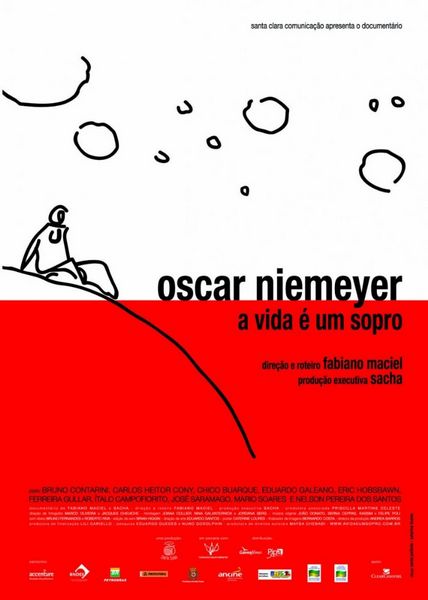
The film is based on face-to-face conversations with the Brazilian architect, with an in medias res beginning and a ’spontaneous’ ending: “The interview is over, isn’t it?” asks Niemeyer, when they begin to talk about women as everyday pleasures for the 100 year-old architect. Besides a wide range of the architect’s mostly public buildings in the biggest Brazilian cities, and also in France, Italy and Algeria, director Fabiano Maciel tries to show us the post-war intellectual and political atmosphere in Brazil, and Niemeyer’s relation to it. We also get to know him as a fighter for social justice and about his role in the construction of Brasilia as a symbol of the workers’ movement in the fifties.
Read More »
La persona de Leo N. / The Person de Leo N. (2005) Alberto Vendemmiati, Documentary
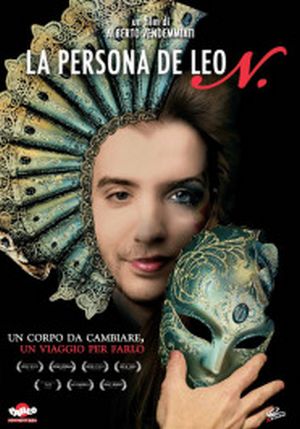
As a twelve-year-old boy, Nicola de Leo already knew she wanted to become a woman. Today, the now forty-year-old transsexual lives in Venice and has changed her name to Nicole. She has undergone a hormone treatment and grown breasts, but she still lives inside the body of a middle-aged man, including a penis, a beard and a substantial Adam’s apple. This is why Nicole is applying for a sex change through official channels. ‘I never thought it would be so hard. I thought making the decision was enough,’ she says. During five tense years, Nicole fights her emotional and physical struggle in the presence of director Alberto Vendemmiati’s camera. Working as an actress, a seller of carnival masks and a prostitute, she finances her cosmetic treatments and looks forward to the subsidised sex change operation. Meanwhile, she turns to her elderly mother for support, who has a hard time accepting that her son will soon be a daughter.
Read More »