
The Dead Class (1975), by Tadeusz Kantor and the Cricot 2 company, is considered one of the most innovative and influential works of twentieth-century theatre. The breakthrough first version of the production – performed to great critical acclaim, but only rarely seen live by audiences outside Poland – was documented on film in 1976 by the Oscar-winning director Andrzej Wajda.
Read More »
Documentary
Quiet Rage: The Stanford Prison Experiment (1992) Ken Musen, Documentary
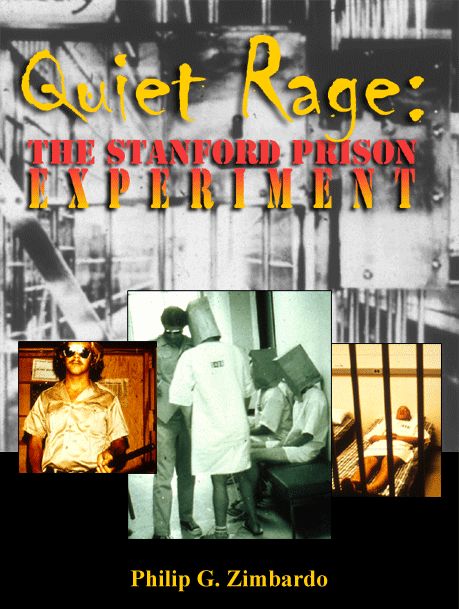
In the summer of 1971, Philip Zimbardo, Craig Haney, and Curtis Banks carried out a psychological experiment to test a simple question. What happens when you put good people in an evil place-does humanity win over evil, or does evil triumph? To explore this question, college student volunteers were pretested and randomly assigned to play the role of prisoner or guard in a simulated prison at Stanford University. Although the students were mentally healthy and knew they were taking part in an experiment, some guards soon because sadistic and the prisoners showed signs of acute stress and depression. After only six days, the planned two-week study spun out of control and had to be ended to prevent further abuse of the prisoners. This dramatic demonstration of the power of social situations is relevant to many institutional settings, such as the Abu Ghraib Prison in Iraq.
Read More »
Yuki Yukite shingun / The Emperor’s Naked Army Marches On (1987) Kazuo Hara, Kenzo Okuzaki, Riichi Aikawa, Masaichi Hamaguchi, Documentary, War

The Emperor’s Naked Army Marches On is a brilliant exploration of memory and war guilt, a subject often ignored in modern Japan. In this controversial documentary, Kazuo Hara follows Kenzo Okuzaki in his real-life struggle against Emperor Hirohito. He proudly declares that he shot BBs at the Royal Palace, distributed pornographic images of the Emperor, and once killed a man for the sake of his strange crusade. As the film progresses, Okuzaki reveals a gruesome mystery: why were some Japanese officers killing their own soldiers during WWII? What happened to their bodies? Okuzaki begs, cajoles, and occasionally beats the story out of elderly veterans. When these old men do break down and talk, their testimonies are some of the most chilling, riveting descriptions of wartime desperation ever committed to film. In his desire to unearth these horrors, Okuzaki’s behavior grows increasingly extreme and bizarre. By the film’s end, Hara seems to ask whether the terrible nature of this buried incident is worth the violence of Okuzaki’s methods.
Read More »
Self and Others (2001) Makoto Satô, Shigeo Gocho, Hidetoshi Nishijima, Documentary

In 1983, photographer Gocho Shigeo met an early death at the young age of 36. The view we see reflected in Gocho’s photographic images has become more profound over time since his death and has struck a chord in people’s hearts. While focusing on Gocho’s collection of photographs Self and Others, the film also visits places associated with him, creating a collage with the manuscripts, letters, photographs and voice recordings remaining in an attempt to capture “one more gesture”—a theme pursued by Gocho through photographic expression. This film is neither a critical biography nor a monograph on the photographer. Rather, we are offered a new perception. As if mesmerized, the photographs Gocho left behind captivate us in their gaze.
Read More »
Études sur Paris (1928) André Sauvage, Documentary
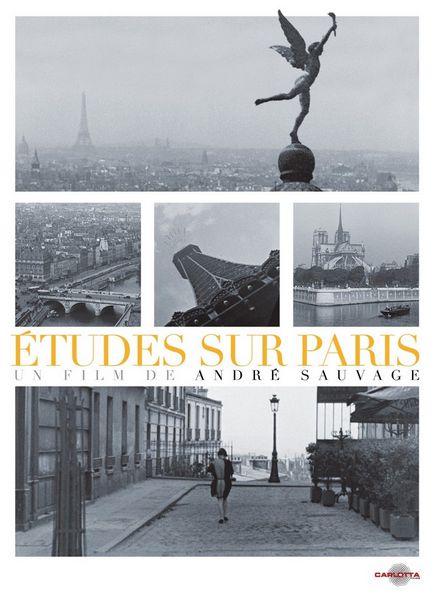
This visually magnificent and poetic city symphony of Paris in the late 1920s earned Sauvage the admiration of Jean Renoir and Jean Vigo. Sauvage maps the metropolis through its street life, monuments, ports, and automobile traffic.
Read More »
Le pays des sourds / In the Land of the Deaf (1992) Nicolas Philibert, Jean-Claude Poulain, Abou Bakar, Anh Tuan, Documentary

With unerring curiousity and sensitivity, director Philbert portrays the difficulties and joys of being deaf, offering vivid portraits of people of all ages coping with and surmounting their challenges.
Read More »
Abbas Kiarostami: A Report (2013) Bahman Maghsoudlou, Kurosh Afsharpanah, Shohreh Aghdashloo, Godfrey Cheshire, Documentary, History

An analysis of the style and vision of Abbas Kiarostami, the world’s most iconic Iranian filmmaker, through the lens of his earliest work, including his first short film (Bread & Alley, 1970) and, particularly, his first feature, The Report. This early example of Kiarostami’s work gives insight into his poetic, humanistic tendencies, combining allegorical storytelling with a documentary, neo-realist sensibility, and often exploring the very nature of film as fiction, that have pervaded his work ever since, including such recent international sensations as A Taste of Cherry and Certified Copy. Exclusive interviews with film critics, historians and scholars (including the late great Andrew Sarris) and those directly involved in the making of The Report provide a look at how the career of this master independent auteur began and was shaped.
Read More »
Die Gebrüder Skladanowsky / A Trick of the Light (1995) Wim Wenders, Stefan Barber, Wiebke Bayer, Nadine Büttner, Biography, Drama, Documentary
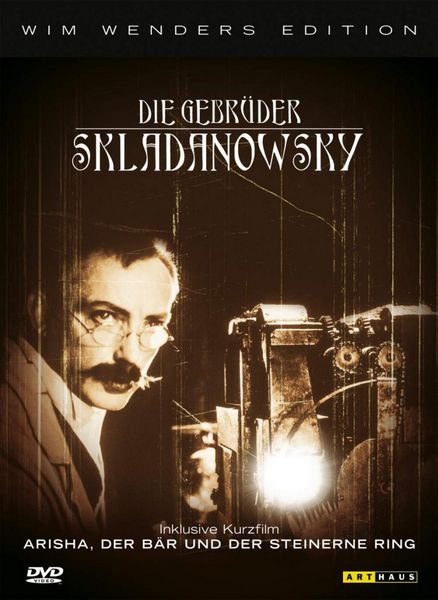
A rare gem of cinematic storytelling that weaves docudrama, fictional reenactment, and experimental photography into a powerful, reflective work on the early days of German cinema. The film tells the story of the Skladanowsky Brothers, the German-born duo responsible for inventing the “bioskop”, an early version of the film projector.
Read More »
Tokyo-Ga (1985) Wim Wenders, Chishû Ryû, Werner Herzog, Yûharu Atsuta, Documentary
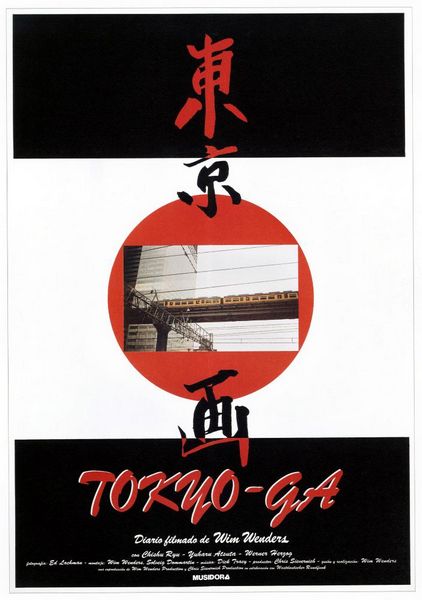
TOKYO-GA, Spanish poster art, 1985, ©Gray City
Taking a breather from the Paris, Texas shooting, Wim Wenders hopped a plane, camera in hand, to look for the Tokyo enshrined by the late Yasujiro Ozu (whose work Wenders dubs “the sacred treasure of the cinema”). What he found instead, documented in this filmic journal, was an urbanized dislocation not far from the forlorn emptiness he coached out of German and American vistas. Whether abstracting businessmen teeing off atop skyscrapers or the rigorous, artisanal craft of building a wax sandwich display, Wenders scrambles for humanity seeping through neon and steel – a humanity linked, inevitably, to the old Japan of Ozu’s films (rebellious tykes, cherry blossoms, tranquil countrysides). A far less queasy piece of hero-worship than Lightning Over Water, the picture meditates not so much on Ozu the filmmaker than on Ozu the vanishing feeling, motifs and images reconsidered in a modernized Japan circa 1983 (the trains that fill the Japanese master’s pictures with notions of inexorable movement have now become bullet expresses, gliding with smooth, ominous impersonality). Elsewhere, Wenders bumps into Werner Herzog (who bitches about having to space-travel to find pure images nowadays), Chris Marker (whose Sans Soleil would make a superb double-bill with Tokyo-Ga) and two aged Ozu stalwarts, gracious, dignified leading man Chishu Ryu and anecdotal camera operator Yuuharu Atsuta. Wenders’ eulogy for a culture alienating its own roots is built, characteristically, upon cinema’s capacity for regenerative beauty, though his links to Ozu are, if anything, more tenuous than his affinity with Nicholas Ray – Ozu’s images distill life, Wenders’ etherealize it. Cinematography by Edward Lachman.
Read More »
Paul Cézanne im Gespräch mit Joachim Gasquet / Cézanne: Conversation with Joachim Gasquet (1989) Danièle Huillet, Jean-Marie Straub, Documentary
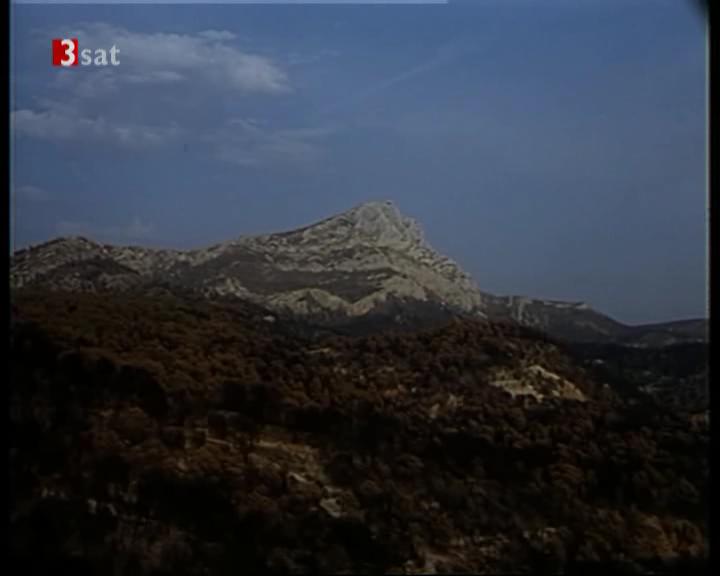
In 1989 Jean-Marie Straub and Danièle Huillet realized a film project that was commissioned by Virginie Herbin, director of the audiovisual department of the Musée d’Orsay. The film is based on Joachim Gasquet’s recollected and imagined dialogs with Cézanne, Ce qui m’a dit…(1921).
Read More »